
It happens to almost every homeowner — you spot a dark brown bug scurrying across the floor and immediately assume the worst. But not every brown bug is a cockroach. Beetles are far more common, far less dangerous, and treated completely differently. Misidentifying one for the other leads to the wrong treatment and a problem that doesn’t go away.
Here’s how to tell them apart quickly and confidently.
The Fastest Way to Tell the Difference
Look at the wings. Beetles have a straight line running down the center of their back where their wing covers (called elytra) meet. Cockroaches have wings that overlap or lie flat without that center line. If you see a clean, straight seam down the middle of the back — it’s almost certainly a beetle.
Body Shape
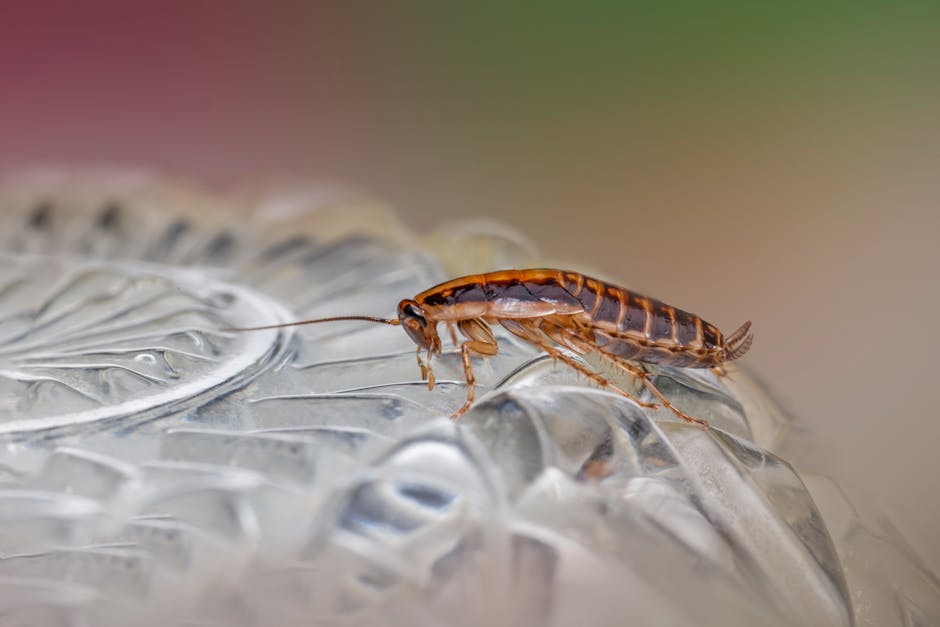
Cockroaches are flat, oval-shaped, and wide relative to their length. Their body is flexible and designed to squeeze through tight gaps. They move fast and erratically.
Beetles tend to be more rounded or elongated with a harder, more rigid shell. They move more slowly and deliberately.
Antennae
Cockroaches have long, thread-like antennae that are often as long as or longer than their body. They wave constantly as the roach moves.
Beetles have shorter antennae in various shapes — some are club-shaped, some segmented, some saw-toothed. Generally shorter and less active than roach antennae.
Legs
Cockroaches have long, spiny legs designed for running. You’ll notice them clearly even at a glance.
Beetles have shorter legs that are less visible when the insect is moving.
Common Beetles Mistaken for Cockroaches
- Ground beetle — black, shiny, fast-moving. Found near doors and windows.
- Drugstore beetle — small, brown, rounded. Found in pantries and dry goods.
- Powderpost beetle — dark brown, elongated. Found near wood and furniture.
- Longhorned beetle — brown with long antennae. Often mistaken for American cockroach.
Why It Matters
Cockroach treatment uses gel baits, IGRs (insect growth regulators), and crack-and-crevice applications. Beetle treatment focuses on eliminating the food or material source — stored food, wood, fabric — and is completely different. Using cockroach treatment on a beetle problem does nothing.
If you’re not 100% certain, don’t guess. A photo identification takes less than a minute and points you to the right treatment immediately.
❓ Frequently Asked Questions
What are the main differences between cockroaches and beetles?
Cockroaches typically have long, flat bodies and long antennae, while beetles have a more rounded shape and shorter antennae. Additionally, cockroaches are often brown or black and have a shiny appearance, whereas beetles can come in various colors and have a hard outer shell.
How can I identify a cockroach vs. a beetle in my home?
To identify whether you have a cockroach vs. a beetle, observe their movement and habitat. Cockroaches tend to scurry quickly and prefer warm, dark areas, while beetles may be found in gardens or near wood sources. Look closely at their body shape and size for further differentiation.
Are cockroaches or beetles more harmful to my home?
Cockroaches are generally considered more harmful as they can carry diseases and trigger allergies. Beetles, on the other hand, can cause damage to wood and plants but are less likely to pose health risks to humans.
What should I do if I find a cockroach vs. a beetle in my house?
If you find a cockroach, it’s important to act quickly by cleaning up food sources and sealing entry points. For beetles, you can remove them manually or use traps if they become a nuisance. Understanding the differences can help you take appropriate action.
How do I prevent cockroaches and beetles in my home?
To prevent cockroaches, keep your home clean, seal cracks, and store food in airtight containers. For beetles, ensure your garden is well-maintained and remove any wood debris. Regular inspections can help you catch infestations early.
Related Reading
Not ready to call? Get free competitive quotes.
🛒 What to Buy: DIY Treatment Products
Professional-grade products — the same ones exterminators use, available without a license.
The same gel pros use — roaches carry it back and wipe out the whole colony.
View Product →
Upgraded formula with an irresistible bait matrix — faster knockdown on tough populations.
View Product →
Silica dust that kills on contact — apply in wall voids and cracks for up to 10 years of residual control.
View Product →
If the infestation is severe or beyond DIY control, see the professional option below.
Compare top-rated local pest control pros — it’s free.
Not Sure What Bug You Found?
Upload a photo to our free AI Pest Identifier. Get an instant ID, severity rating, and step-by-step treatment plan — no account required.
🔍 Identify My Pest Free →