
Mouse Droppings or Roach Droppings: How to Tell What’s in Your House
Finding mouse droppings or roach droppings in your home is not exactly the highlight of anyone’s week.
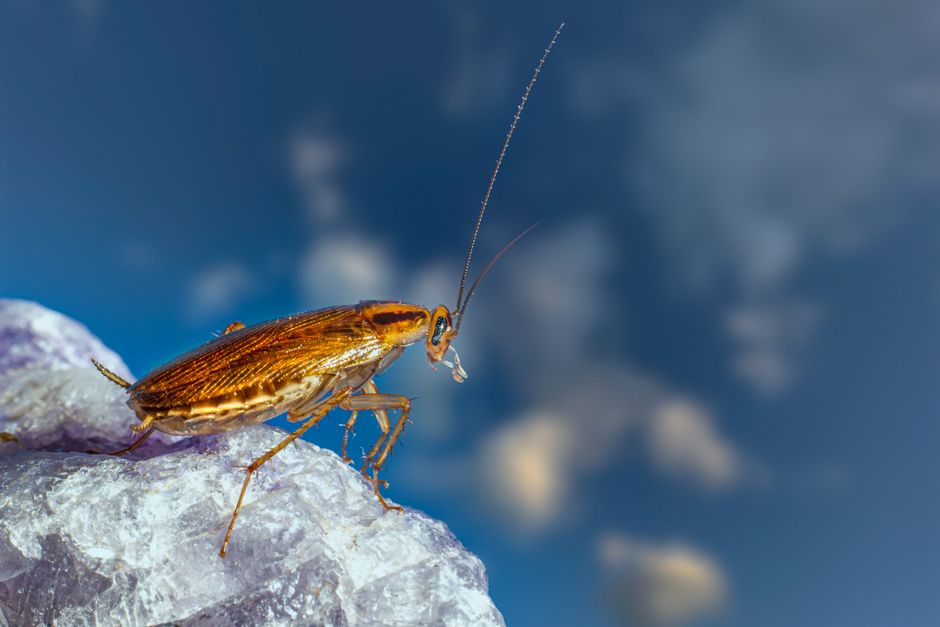
But before you grab a spray bottle, set traps, or start panic-Googling every bug known to mankind, you need to know what you’re dealing with.
Two of the most common culprits are mice and cockroaches. And yes, their droppings can look similar at first glance. The good news is there are a few simple ways to tell the difference.
Here’s how to compare mouse droppings vs roach droppings, where to look, how to clean them safely, and when it’s time to call in help.
Quick Answer: Mouse Droppings vs Roach Droppings
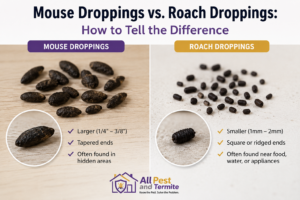
Mouse droppings are usually larger, smooth, dark, and shaped like tiny grains of rice with pointed ends. Roach droppings are usually smaller and may look like black pepper, coffee grounds, or tiny dark pellets, depending on the roach species.
That’s the quick version.
Now let’s break it down so you don’t have to stand in your kitchen squinting at poop like a crime scene investigator.
What Mouse Droppings Look Like
Mouse droppings are typically small, dark pellets. They are often about 1/4 inch long, though some can be a little bigger depending on the mouse and what it has been eating.
Most mouse droppings have:
- A rice-like shape
- Pointed or tapered ends
- A dark brown or black color
- A smooth surface
- A scattered pattern along walls, cabinets, drawers, or food areas
Mice are sneaky. They like hidden spaces, so you may find droppings behind appliances, under sinks, inside cabinets, in pantries, in garages, or along baseboards.
If you’re seeing droppings near food packaging, shredded paper, insulation, or gnaw marks, mice move way up the suspect list.
What Roach Droppings Look Like
Roach droppings can be trickier because they change depending on the type and size of the cockroach.
Small roaches often leave droppings that look like:
- Black pepper
- Coffee grounds
- Tiny dark specks
- Smudges or stains in active areas
Larger roaches may leave droppings that are more cylindrical and ridged. They can look like tiny dark pellets, but they are usually smaller than mouse droppings.
You’ll often find roach droppings in warm, damp, food-friendly areas. Think kitchens, bathrooms, under sinks, near trash cans, behind refrigerators, inside cabinets, and around cracks or crevices.
Mouse Droppings vs Roach Droppings: Key Differences
Here’s the simple comparison:
| Feature | Mouse Droppings | Roach Droppings |
|---|---|---|
| Size | Usually around 1/4 inch long | Often smaller, like pepper or coffee grounds |
| Shape | Rice-shaped with pointed ends | Specks, pellets, or ridged cylinders |
| Texture | Smooth | Can look grainy, dusty, or ridged |
| Common Locations | Pantries, cabinets, drawers, garages, baseboards | Kitchens, bathrooms, under sinks, near appliances |
| Other Signs | Gnaw marks, nests, scratching sounds, chewed food packaging | Musty odor, egg cases, shed skins, live roaches at night |
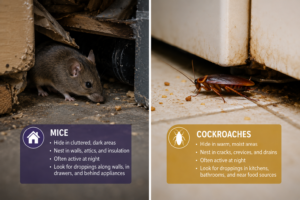
Where You Find the Droppings Matters
The location can tell you a lot.
If the droppings are inside a pantry, near food bags, in drawers, or along the edge of the wall, mice could be the problem.
If the droppings are under the sink, behind the fridge, near the dishwasher, around trash, or in damp corners, roaches may be more likely.
Of course, pests do not read the rulebook. You can have both mice and roaches in the same home, especially if there is easy food, water, clutter, or gaps where pests can get inside.
Do Mouse or Roach Droppings Mean You Have an Infestation?
Not always. One or two droppings may mean a pest passed through.
But if you keep finding fresh droppings, especially in the same areas, that usually means the pest is active.
Here are a few warning signs:
- You find new droppings after cleaning
- You see droppings in multiple rooms
- You notice gnaw marks or damaged food packaging
- You see live roaches, especially during the day
- You smell a musty or oily odor
- You hear scratching in walls, ceilings, or cabinets
Fresh droppings are often darker and softer-looking. Older droppings may look dry, faded, or crumbly.
How to Clean Up Mouse Droppings Safely
Do not sweep or vacuum mouse droppings right away. That can stir up particles you really do not want floating around your house.
Instead, use this safer cleanup process:
- Ventilate the area. Open windows and doors if possible.
- Wear gloves. Rubber or disposable gloves are best.
- Spray the droppings. Use an EPA-registered disinfectant or a proper bleach solution.
- Let it sit. Give the disinfectant time to work based on the product label.
- Wipe it up with paper towels. Do not dry sweep.
- Throw everything away safely. Bag the waste and remove it from the home.
- Wash your hands. Even if you wore gloves. Especially if you wore gloves.
If there are a lot of droppings, nesting material, dead rodents, or strong odors, it may be smarter to call a professional instead of turning this into a weekend project from hell.
How to Clean Up Roach Droppings
Roach droppings should also be cleaned carefully, especially in kitchens and food areas.
- Wear gloves.
- Remove food, dishes, and utensils from the area.
- Vacuum or wipe up loose debris if rodent droppings are not suspected.
- Clean the area with soap and water.
- Disinfect surfaces where appropriate.
- Focus on cracks, corners, cabinet hinges, appliance edges, and under-sink areas.
Cleaning helps, but it does not solve the whole problem if roaches are still hiding nearby. You need to remove food and water sources, seal hiding spots, and use the right treatment.
How to Get Rid of Mice
If the droppings look like mouse droppings, start with the basics:
- Seal gaps around pipes, doors, vents, and foundation cracks
- Store food in hard-sided, sealed containers
- Clean crumbs and pet food at night
- Remove nesting materials like cardboard clutter
- Set traps along walls where mice travel
- Check traps daily
Mice only need a small opening to get inside. If you trap mice but never seal entry points, you may just be running a very depressing mouse hotel.
How to Get Rid of Roaches
If the droppings look like roach droppings, focus on food, water, and hiding places.
- Clean grease, crumbs, and spills
- Take out trash regularly
- Fix leaks under sinks and around appliances
- Do not leave pet food out overnight
- Use roach monitors to find activity zones
- Use gel bait or bait stations in targeted areas
- Avoid spraying random surfaces if you are using bait, since sprays can push roaches away from the bait
Roaches are great at hiding. That’s annoying, but it also means targeted treatment usually works better than blasting the whole kitchen with whatever spray was closest at the store.
How to Prevent Mice and Roaches From Coming Back
Prevention is not exciting, but it works.
- Store food in sealed containers
- Wipe counters at night
- Keep trash sealed
- Fix moisture problems
- Seal cracks, gaps, and holes
- Reduce cardboard and clutter
- Check under appliances regularly
- Keep pet food and water bowls clean
The big idea is simple: remove food, water, shelter, and easy entry points. Pests are not complicated. They want the same things we do. They’re just worse roommates.
🛒 What to Buy: DIY Treatment Products
Professional-grade products — the same ones exterminators use, available without a license.
The same gel pros use — roaches carry it back and wipe out the whole colony.
View Product →
Upgraded formula with an irresistible bait matrix — faster knockdown on tough populations.
View Product →
Silica dust that kills on contact — apply in wall voids and cracks for up to 10 years of residual control.
View Product →
Professional-grade bromadiolone bait — a single feeding delivers a lethal dose for rats and mice.
View Product →
Tamper-resistant bait station — keeps children and pets safe while targeting rodents.
View Product →
If the infestation is severe or beyond DIY control, see the professional option below.
When to Call a Pest Control Professional
Call a pest control pro if:
- You keep finding new droppings
- You see live roaches during the day
- You hear rodent activity in walls or ceilings
- You find a large amount of droppings
- You have kids, pets, asthma, allergies, or health concerns
- You tried DIY treatment and the problem keeps coming back
A small pest problem is easier to fix than a full-blown infestation. Waiting usually does not make it cheaper.
Need professional pest control?
Get connected with a licensed exterminator in your area — fast response, residential service.
Use Our Free Pest Identifier
Still not sure if you’re looking at mouse droppings, roach droppings, or something else entirely?
Use our free AI pest identifier at id.allpestandtermite.com. Upload a photo, get help identifying the pest, and see what your next step should be.
Frequently Asked Questions
What do mouse droppings look like?
Mouse droppings usually look like small, dark grains of rice. They are often smooth, pellet-shaped, and may have pointed ends.
What do roach droppings look like?
Roach droppings often look like black pepper, coffee grounds, tiny dark specks, or small ridged pellets. The exact look depends on the roach species and size.
Are mouse droppings dangerous?
Mouse droppings can carry health risks, so they should be cleaned carefully. Avoid dry sweeping or vacuuming them. Wet them with disinfectant first, then wipe them up using gloves and disposable towels.
Can roach droppings make you sick?
Roach droppings can contribute to allergens and may contaminate surfaces, especially in kitchens. Clean affected areas and deal with the roach problem instead of only wiping up the mess.
Should I use traps or bait?
For mice, traps are commonly used along walls and travel paths. For roaches, bait stations or gel bait can work well when placed near active areas. Always follow product labels and keep products away from kids and pets.
What if I can’t tell whether the droppings are from mice or roaches?
Take a clear photo, note where you found the droppings, and look for other signs like gnaw marks, egg cases, odors, or live pests. You can also use a pest identifier tool or contact a pest control professional.
Related Reading
❓ Frequently Asked Questions
What do mouse droppings look like compared to roach droppings?
Mouse droppings are small, dark, and shaped like a grain of rice, typically measuring about 1/4 to 1/2 inch long. In contrast, roach droppings are often cylindrical and can be either dark brown or black, resembling pepper flakes or small coffee grounds.
How can I tell if I have mouse droppings or roach droppings in my home?
To determine if you have mouse droppings or roach droppings, look at the size and shape of the droppings. Mouse droppings are more elongated and have pointed ends, while roach droppings are usually more rounded and can vary in size depending on the species.
Are mouse droppings or roach droppings more dangerous to my health?
Both mouse droppings and roach droppings can pose health risks, but mouse droppings are particularly concerning as they can carry diseases like hantavirus and salmonella. Roach droppings can trigger allergies and asthma in sensitive individuals, so it’s important to address any pest issues promptly.
What steps should I take if I find mouse droppings or roach droppings in my home?
If you find mouse droppings or roach droppings, it’s essential to clean the area carefully using gloves and a mask to avoid inhaling any harmful particles. After cleaning, consider sealing entry points and reducing clutter to prevent future infestations.
Mouse droppings or roach droppings: How to tell which pest you have?
To accurately identify whether you have mouse droppings or roach droppings, examine the droppings closely for size and shape. Additionally, look for other signs of infestation, such as nests or tracks, which can help you determine the type of pest and take appropriate action.
Not ready to call? Get free competitive quotes.
Compare top-rated local pest control pros — it’s free.
Not Sure What Bug You Found?
Upload a photo to our free AI Pest Identifier. Get an instant ID, severity rating, and step-by-step treatment plan — no account required.
🔍 Identify My Pest Free →