
Are You Seeing Cockroaches in Your Home?
Finding cockroaches in your home is stressful. But before you do anything — grab a bug bomb, call an exterminator, or start Googling — you need to know which species you’re dealing with. German and American cockroaches look similar at a glance, but they behave completely differently, live in completely different places, and require completely different treatment approaches. Getting this wrong means wasting time and money.
Short on time? Find out what pest you have right now — free.
Use our free AI Pest ID tool, then come back to read the full treatment guide.
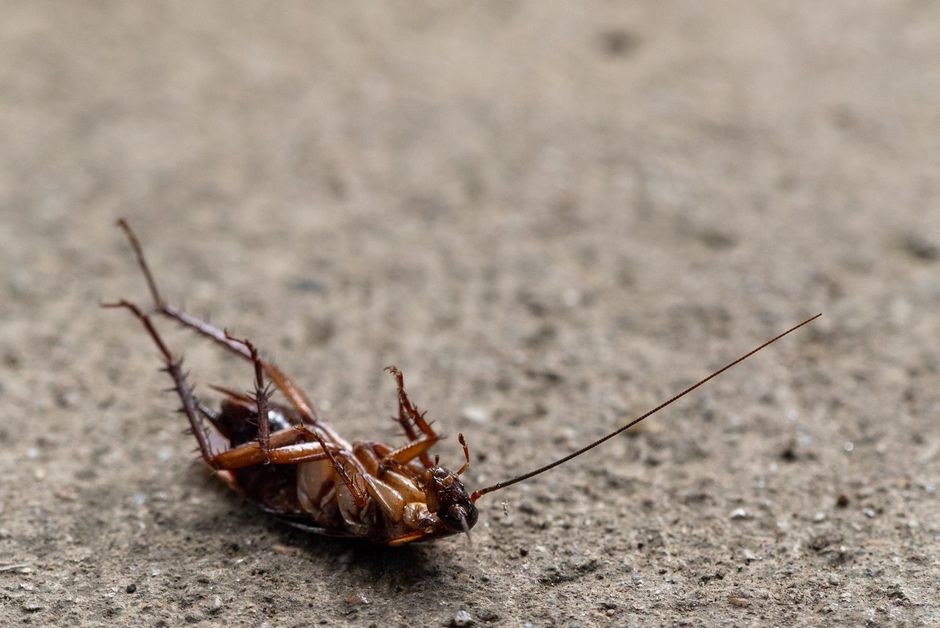
The Size Mix-Up That Trips Everyone Up
Here’s a fact error that shows up all over the internet — and it matters for identification. German cockroaches are notoriously small. We’re talking about 0.5 to 0.6 inches long — roughly the size of a penny. That tiny brown bug you’re barely noticing near the stove? That’s a German cockroach.
The 1.5 to 2-inch size you might read about elsewhere? That’s the American cockroach — the largest house-infesting species in the U.S. The two species are not even close in size. Getting them mixed up will send you down the wrong treatment path entirely.
At-a-Glance Comparison
| Feature | German Cockroach | American Cockroach |
|---|---|---|
| Size | Small (~0.5 – 0.6 inches) | Large (1.5 – 2+ inches) |
| Color / Markings | Light brown with 2 dark parallel stripes behind head | Reddish-brown with a yellowish figure-8 on the head |
| Flight | Has wings but rarely flies — prefers to scurry | Capable of short, clumsy flights or glides |
| Origin | Carried inside via boxes, bags, used appliances, or groceries | Wanders in from sewers, basements, mulch, or drains |
| Egg Habit | Female carries the egg capsule until just before hatching | Drops egg capsule almost immediately in a hidden spot |
| What One Sighting Means | A breeding colony is almost certainly already present | Likely a lone wanderer — may not be an established infestation |
German Cockroach: The Resident
This is the key behavioral distinction that changes everything about how you respond.
German cockroaches cannot survive outdoors. They don’t wander in from your yard, they don’t come up from the sewer, and they don’t live anywhere outside your climate-controlled home. If you have German cockroaches, they were carried in — hidden in a grocery bag, tucked inside a used appliance, living in a moving box, or hitching a ride in secondhand furniture or electronics.
The moment they arrive, they start establishing a colony. They find warm, humid harborage points — the gap behind your refrigerator, the void under your dishwasher, inside your microwave, under the stove — and they start breeding. German cockroaches have one of the fastest reproduction cycles of any household pest. A single female produces an egg case containing 30–40 eggs roughly every 6 weeks. A small problem becomes a serious infestation faster than most people realize.
What this means for you: Seeing one German cockroach is never “just one cockroach.” Assume a colony is already present and treat accordingly.
American Cockroach: The Invader
American cockroaches are a completely different situation. They live outdoors — in sewers, storm drains, mulch beds, wood piles, and basement crawl spaces. They wander inside, usually in search of water, after a heavy rain, or through a gap around a pipe or door.
Seeing one large reddish-brown cockroach near a drain or in your basement does not automatically mean you have an infestation. It might be a single intruder that found its way in. That said, if you’re seeing them regularly or in multiple areas of the home, there’s likely a point of entry that needs to be addressed and possibly a nest nearby.
The treatment for American cockroaches starts outside — perimeter sprays, exclusion work around foundation gaps, and addressing moisture problems that attract them. German cockroaches require a completely different interior-focused approach.
German Cockroach Identification Signs
Here’s what to look for when you’re trying to confirm you’ve got German cockroaches:
- Size: Small — 0.5 to 0.6 inches. About the size of a penny. If it looks big, it’s probably not a German cockroach.
- Color and markings: Light tan to medium brown with two distinct dark parallel stripes running from just behind the head down the thorax. This is the most reliable visual identifier.
- Hiding spots: Warm, humid, dark harborage points close to food and water. Behind the refrigerator, under the dishwasher, inside the motor compartments of appliances, in cabinet hinges, behind electrical outlet covers in the kitchen.
- Droppings: Tiny black specks that look like ground pepper or coffee grounds. Look for accumulations in the corners of cabinets, along the edges of shelves, and in the gaps between countertop and wall.
- Smear marks: In areas with heavy moisture, German cockroaches leave dark, irregular smear marks along surfaces where they travel.
- Musty odor: A significant infestation produces a distinctive musty, oily smell. If your kitchen has an unexplained odor you can’t trace to food, that’s a warning sign.
The Squeeze Test — How Egg Cases Tell You Everything
Here’s a diagnostic detail most homeowners never hear about, and it’s one of the most reliable ways to confirm German cockroaches on the spot.
German cockroach females carry their egg case (ootheca) attached to their rear end until just a day or two before it hatches. If you spot a cockroach walking around with a small brown capsule — about the size of a grain of rice — attached to its back end, that’s a German cockroach. Almost guaranteed.
American cockroaches drop their egg cases almost immediately after producing them, hiding them in a protected spot. You might find an American cockroach egg case tucked behind a baseboard or in a dark corner, but you’ll almost never see the female carrying it.
The takeaway: if you ever see a cockroach with a capsule on its rear, you don’t need any other confirmation. You have German cockroaches, and the egg case she’s carrying contains 30–40 more.
Do NOT Use a Bug Bomb
This is important enough to put in its own section because it’s one of the most common and damaging mistakes homeowners make.
When people discover a bad cockroach problem, the instinct is to grab a total release fogger — a “bug bomb” — and let it rip. Don’t do this for German cockroaches. It makes the problem significantly worse.
Here’s why: German cockroaches live deep inside walls, behind appliances, inside cabinet voids, and in the narrow gaps around pipes. The chemical mist from a fogger cannot penetrate those harborage points. What it does do is irritate every cockroach that’s exposed. Disturbed cockroaches scatter. They push deeper into your walls. They move into adjacent rooms, under flooring, and into areas that were previously unaffected. You don’t kill the infestation — you spread it.
Professional pest control operators and university extension programs consistently advise against foggers for German cockroaches. The only effective approach is targeted treatment — gel bait placed directly into harborage areas and insecticide dust applied into wall voids.
How to Get Rid of German Cockroaches
Once you’ve confirmed you’re dealing with German cockroaches, here’s the step-by-step approach that actually works:
- Sanitation first. Remove food debris, clean grease buildup behind and under appliances, fix any leaking pipes or dripping faucets, and eliminate cardboard clutter. German cockroaches need food and water close to their harborage. Cut off access to both and the bait works faster.
- Apply gel bait in harborage areas. This is the single most effective tool for German cockroaches. Products like Advion Roach Bait Gel use an attractant that cockroaches can’t resist. Apply small dots (pea-sized) directly into the cracks, crevices, and voids where cockroaches are hiding — behind the fridge, under the stove, inside cabinet hinges, along the back edge of drawers. Do not apply it to open surfaces. Cockroaches feed on the bait and carry the active ingredient back to the colony. One feeding cockroach can eliminate multiple others.
- Dust wall voids with CimeXa or boric acid. For serious infestations, apply a thin layer of CimeXa silica dust into wall voids through outlet plates and under kickboards. The dust adheres to the cockroach’s exoskeleton and kills by dehydration. It has up to 10 years of residual effectiveness in undisturbed areas.
- Set sticky trap monitors. Place glue board traps near harborage areas. These don’t solve the problem but they tell you how heavy the population is and where the hot spots are. Check them weekly.
- Seal entry points. Caulk gaps around pipes, behind appliances, and along baseboards to reduce the number of harborage points and prevent re-introduction.
- Inspect incoming items. German cockroaches hitchhike. Check any secondhand appliances, furniture, or boxes before they come inside. Pay particular attention to electronics, which are warm and attract them.
The Bait Rotation — What to Do When It Stalls
Here’s a piece of professional-grade advice that most DIY guides skip entirely.
German cockroaches reproduce so rapidly that populations can develop a genetic aversion to the glucose attractants used in some gel bait formulas. If you’ve been using one bait for a while and the population seems to plateau or the bait is being ignored, it’s not necessarily because the product is bad — it may be because the local population has developed an aversion to that specific attractant.
The fix is bait rotation. If Advion isn’t getting traction after two to three weeks, switch to a gel with a different bait matrix and active ingredient — Vendetta Plus (abamectin), Maxforce FC Magnum (fipronil), or Rockwell’s InVict Gold (imidacloprid) are common rotation choices. Rotating between different chemical classes prevents the population from adapting and keeps your treatment moving forward.
This is the same strategy professional pest control operators use on persistent commercial accounts. Now you have it too.
🛒 What to Buy: DIY Treatment Products
Professional-grade products — the same ones exterminators use, available without a license.
The same gel pros use — roaches carry it back and wipe out the whole colony.
View Product →
Pro Tip: Apply the gel in small, pea-sized dots in areas where you’ve seen roach activity, but avoid large globs; this encourages roaches to consume it without being deterred by excess.
Upgraded formula with an irresistible bait matrix — faster knockdown on tough populations.
View Product →
Pro Tip: Apply the gel in small, pea-sized dots in areas where you’ve seen cockroach activity, focusing on cracks and crevices, as this allows the roaches to consume it without feeling threatened. Avoid placing it in open areas where it can dry out or be disturbed.
Silica dust that kills on contact — apply in wall voids and cracks for up to 10 years of residual control.
View Product →
Pro Tip: Ensure you apply CimeXa in a thin, even layer and avoid clumping, as this allows the dust to adhere better to surfaces and increases its effectiveness against cockroaches.
If the infestation is severe or beyond DIY control, see the professional option below.
How to Keep Cockroaches From Coming Back
German cockroaches don’t come back on their own — they come back because something carried them in again, or because conditions inside the home remained favorable. Here’s how to prevent re-infestation:
- Store food in airtight containers. Don’t leave pet food out overnight.
- Empty and clean under appliances regularly. Grease buildup under stoves is one of the most common German cockroach attractants.
- Fix leaks immediately. A dripping pipe under the sink is a water source that can sustain a colony.
- Inspect secondhand items — especially electronics, appliances, and furniture — before they enter your home.
- Keep cardboard to a minimum. Cockroaches love corrugated cardboard, and boxes from stores or warehouses can carry eggs.
- If you live in a multi-unit building, consider applying boric acid dust inside wall voids as a long-term preventive measure. German cockroaches spread between units through shared walls.
When to Call a Professional
DIY treatment works for moderate German cockroach infestations when you apply bait correctly and consistently. But there are situations where professional help is the smarter call:
- You’re seeing cockroaches throughout multiple rooms, not just the kitchen or bathroom
- You’re seeing them during the day (German cockroaches are nocturnal — daytime activity usually means the population is too large for the harborage to contain everyone)
- You’ve been treating for three or more weeks without a significant drop in population
- You’re in a multi-unit building where the infestation is coming through shared walls
Need professional pest control?
Get connected with a licensed exterminator in your area — fast response, residential service.
Not Sure What You’re Looking At?
If you’re still not 100% certain whether you’ve got German cockroaches, American cockroaches, or something else entirely, don’t guess. Use our free AI pest identifier at id.allpestandtermite.com — describe what you’re seeing or upload a photo and get a confirmed identification plus a full treatment plan in minutes.
Still not sure exactly what you’re dealing with?
Describe your pest or upload a photo — our free AI identifies it in seconds and gives you a full treatment plan.
Not ready to call? Get free competitive quotes.
Compare top-rated local pest control pros — it’s free.
Related Reading
❓ Frequently Asked Questions
How big are German cockroaches compared to American cockroaches?
German cockroaches are small — only about 0.5 to 0.6 inches long, roughly the size of a penny. American cockroaches are much larger, typically 1.5 to 2 inches or more, making them the biggest house-infesting cockroach species in the U.S.
How can I tell if I have German cockroaches or American cockroaches?
Size and markings are the easiest tells. German cockroaches are small (0.5–0.6 inches), light brown, and have two dark parallel stripes behind their head. American cockroaches are large (1.5–2+ inches), reddish-brown, and have a yellowish figure-8 pattern on the back of their head. Behavior matters too: if you see one cockroach wandering, it’s likely an American that wandered in. If you see a German cockroach, assume a colony is already present.
Why shouldn’t I use a bug bomb for German cockroaches?
Bug bombs don’t penetrate the deep cracks where German cockroaches hide. Instead, the chemical irritates them and causes them to scatter into walls and adjacent rooms — spreading the infestation. Gel bait placed directly in harborage areas is far more effective.
What is the Squeeze Test for cockroach egg cases?
If you see a cockroach walking around with a small brown capsule attached to its rear end, it’s almost certainly a German cockroach. German females carry their egg case until just before it hatches. American cockroaches drop theirs immediately. A walking female with an egg capsule = confirmed German cockroach.
What is bait aversion and how do I rotate cockroach baits?
German cockroaches can develop a genetic aversion to glucose attractants in bait formulas. If the bait stops working, switch to a gel with a different active ingredient — for example, rotate from Advion (indoxacarb) to a product with a different bait matrix. Rotating keeps the population from adapting and stalling your treatment.
Not Sure What Bug You Found?
Upload a photo to our free AI Pest Identifier. Get an instant ID, severity rating, and step-by-step treatment plan — no account required.
🔍 Identify My Pest Free →