
Which Cockroach Is Actually In Your Home?
Finding a cockroach sends most people straight to the store for whatever product is closest to the register. That’s the wrong move. American and German cockroaches look vaguely similar when you catch one darting under the stove, but they live in completely different environments, reproduce at completely different rates, fly (or don’t), and require completely different treatment strategies. Treating the wrong species the wrong way means weeks of wasted effort and money — and a growing infestation.
This guide gives you the exact diagnostic information a pest control professional would use to make the call on the spot.
Short on time? Find out what pest you have right now — free.
Use our free AI Pest ID tool, then come back to read the full treatment guide.
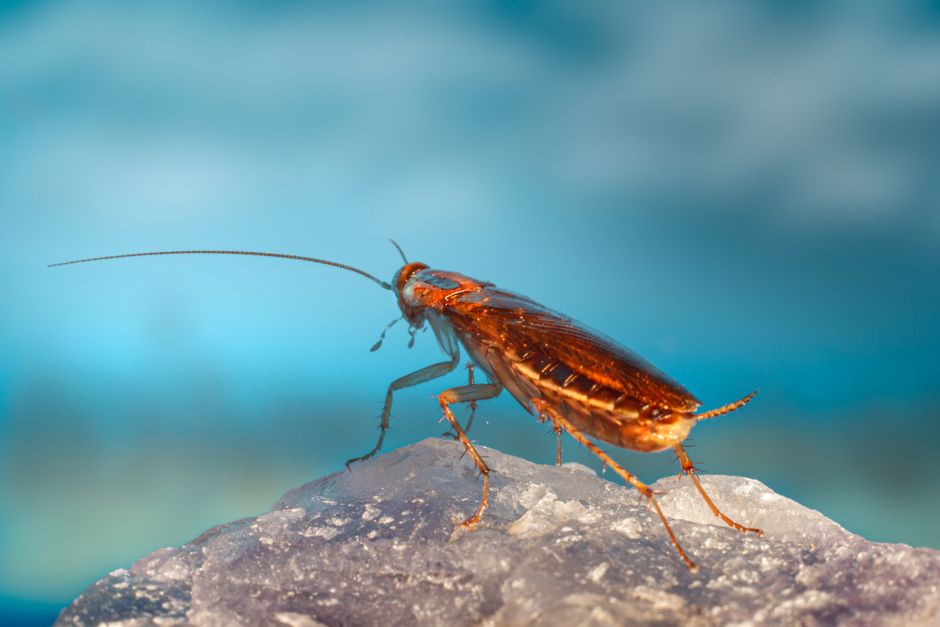
The Size Facts — Start Here
Here’s the most common mix-up you’ll find on the internet, and it matters more than you’d think. German cockroaches are small — about 0.5 to 0.6 inches long, roughly the size of a penny. That little tan bug you barely noticed near the dishwasher? That’s a German cockroach.
The 1.5 to 2.5-inch cockroach — the one that makes people scream when it runs across the kitchen floor — is the American cockroach. It is the largest house-infesting cockroach species in the United States. The two species are nowhere near the same size, and getting them confused will send you down the wrong treatment path entirely.
At-a-Glance Comparison
| Feature | German Cockroach | American Cockroach |
|---|---|---|
| Size | Small (0.5 – 0.6 inches) | Large (1.5 – 2.5+ inches) |
| Color / Markings | Light brown with two dark parallel “racing stripes” behind the head | Reddish-brown with a yellowish figure-8 pattern on the back of the head |
| Flight | Has wings but almost never flies — strongly prefers to run | Capable of flying or gliding, especially in warm weather |
| Primary Habitat | Strict indoor pest — kitchens, bathrooms, appliance voids | Outdoor pest — sewers, drains, basements, mulch beds |
| Egg Case Habit | Female carries the egg case until just before hatching (30–40 eggs) | Female drops egg case quickly in a hidden spot (~16 eggs) |
| Infestation Speed | Explosive — one female can produce thousands of offspring in months | Slower — colonies grow, but single sightings are often lone wanderers |
| What One Sighting Means | A breeding colony is almost certainly already present | Likely a lone wanderer that came in from outside |
🐣 Also watch for baby roaches (nymphs): Baby German cockroaches don’t have fully developed wings but have a distinct lighter stripe running down the middle of their dark backs. Baby American cockroaches are uniformly reddish-brown and lack that stripe entirely. Not sure if you’re looking at a baby roach or a beetle? Use our free AI Pest ID tool for a confirmed ID in seconds.
German Cockroach: The Resident
This is the behavioral distinction that changes everything about how you respond.
German cockroaches cannot survive outdoors. They don’t come up from the sewer, they don’t wander in from your yard, and they don’t live anywhere outside your climate-controlled home. If you have German cockroaches, someone carried them in — tucked inside a grocery bag, hiding in a used appliance you bought secondhand, living in a cardboard moving box, or hitching a ride in furniture or electronics. They are expert stowaways.
This is not a cleanliness issue: German cockroaches are structural hitchhikers. You can keep a spotless kitchen, but if you bring home a cardboard shipping box from an online delivery, a used microwave, or even a grocery bag that spent time in an infested vehicle, you can accidentally introduce them. Getting rid of them isn’t about scrubbing harder — it’s about targeted treatment.
Once inside, they immediately begin establishing a colony in warm, humid spots close to food and water: the motor compartment behind the refrigerator, the void under the dishwasher, inside the microwave, the gaps around the stove, behind electrical outlet covers in the kitchen. German cockroaches are nocturnal, so if you’re spotting one during the day, that usually means the hidden population has grown too large for the available harborage space to hold everyone. That’s an emergency signal, not a minor observation.
The reproduction math is what makes them uniquely dangerous among household pests. A single female produces an egg case containing 30 to 40 eggs roughly every six weeks. Left unchecked, one cockroach becomes thousands within months.
What this means for you: Seeing one German cockroach is never “just one cockroach.” Assume a colony is already established and act immediately.
American Cockroach: The Invader
American cockroaches are a completely different situation. They are an outdoor species — they live in sewers, storm drains, mulch beds, wood piles, and damp basement crawl spaces. They wander inside opportunistically, usually following pipe routes or foundation gaps, often after heavy rain or in search of water.
Seeing one large reddish-brown cockroach near a drain, in your basement, or in a bathroom does not automatically mean you have a breeding infestation inside your home. It may be a single intruder. That said, if you’re seeing them consistently in multiple areas of the home, there’s likely an entry point that needs to be sealed and possibly a nest in a crawl space or under a slab nearby.
The treatment for American cockroaches starts outside — perimeter treatments, granular baits around the foundation, and addressing the moisture sources that draw them in. This is the opposite of the interior-focused approach required for German cockroaches.
Can They Fly?
This is a question that matters because a flying cockroach in a warm room is genuinely alarming, and people often have no idea which species can actually do it.
American cockroaches: yes, they can fly. They have fully developed wings and will take flight or glide when disturbed, especially in warm weather when temperatures climb above roughly 85°F. It’s not graceful or controlled — more of a startled glide from a high spot to the floor — but it happens. If you’ve ever had a large cockroach fly toward you in a warm bathroom or garage, that was almost certainly an American cockroach.
German cockroaches: almost never. They have wings, but they are functionally non-functional for flight. German cockroaches are runners. In the rare case a German cockroach appears to flutter slightly when falling, it’s not the same as the deliberate glide of an American cockroach. If your cockroach is flying, rule out German cockroaches immediately — it’s almost certainly an American.
If a cockroach takes flight and glides deliberately across the room toward you, you can instantly rule out German cockroaches. It is almost certainly an American cockroach (or a smokybrown cockroach), meaning your target area for treatment should shift to the exterior and drains rather than deep kitchen voids.
Egg Cases: The Definitive Field ID
Most homeowners never know about this, but it’s one of the most reliable identification methods available.
German cockroach females carry their egg case (ootheca) attached to their body until just a day or two before it hatches. If you see a cockroach walking around with a small brownish capsule — roughly the size and shape of a grain of rice — attached to its rear end, you are looking at a German cockroach. No other common house-infesting species does this consistently. That capsule contains 30 to 40 eggs.
American cockroach females drop their egg cases almost immediately after producing them, tucking them into crevices, behind baseboards, or in other protected spots. Each American cockroach egg case holds around 16 eggs. You might find an egg case on a shelf or in a dark corner, but you’ll almost never catch the female carrying it.
The quick rule: Cockroach walking around with a capsule on its rear = German cockroach, confirmed. No need for any other identification.
German Cockroach Identification Signs
Beyond size and the stripe markings, here’s what to look for when you’re trying to confirm German cockroaches in the home:
- Size check first: Small and tan, roughly the size of a penny. If it’s bigger than that, it’s probably not a German cockroach.
- Two dark stripes: The two parallel dark lines running from behind the head down the pronotum (the shield-like section behind the head) are the most reliable visual marker.
- Droppings: Tiny black specks resembling ground pepper or coffee grounds. Look in the corners of cabinets, along shelf edges, and in the gap between the countertop and wall.
- Smear marks: Dark, irregular streaks on surfaces where they travel in moist areas.
- Musty odor: A heavy infestation produces a distinctive oily, musty smell. An unexplained kitchen odor with no food source is a warning sign.
- Daytime activity: German cockroaches are nocturnal. Seeing one during daylight hours almost always means the population is too large for its harborage — a sign the infestation is serious.
Do NOT Use a Bug Bomb
This section exists because this mistake is so common and so damaging that it deserves its own space.
When people discover a cockroach problem, the instinct is to grab a total release fogger — a “bug bomb” — and clear the space. Don’t do this for German cockroaches. It makes the problem significantly worse.
German cockroaches live deep inside walls, behind appliances, inside cabinet voids, and in the narrow gaps around pipes. The chemical mist from a fogger cannot reach those harborage points. What it does do is irritate every cockroach exposed to the mist. Disturbed cockroaches scatter. They push deeper into your walls. They spread into adjacent rooms and previously unaffected areas. You don’t eliminate the infestation — you redistribute it.
University extension programs and professional pest control operators consistently advise against foggers for German cockroaches. The correct approach is targeted gel bait placed directly into harborage areas.
How to Get Rid of German Cockroaches
Once you’ve confirmed you’re dealing with German cockroaches, here’s the step-by-step treatment approach that actually works:
- Sanitation first. Remove food debris, deep-clean behind and under appliances (grease buildup under stoves is a primary attractant), fix any dripping faucets or leaking pipes, and eliminate cardboard clutter. Cut off their food and water access and the bait works faster.
- Apply gel bait in harborage areas. This is the single most effective tool for German cockroaches. Products like Advion Roach Bait Gel use an attractant cockroaches can’t resist. Apply small pea-sized dots directly into cracks, crevices, and voids — behind the fridge, under the stove, inside cabinet hinges, along the back edge of drawers, around pipes. Don’t apply to open surfaces; get it into their hiding spots.
- Critical warning: never spray near your gel bait. If you apply a liquid residual insecticide — a bug spray, a perimeter spray, anything aerosol — near your gel bait placements, you will contaminate the bait. The repellent chemicals in the spray cause cockroaches to avoid the bait entirely, undoing your treatment. Let the bait work on its own. One feeding cockroach carries the active ingredient back to the colony.
- Dust wall voids with CimeXa or boric acid. For serious infestations, apply silica dust through outlet plates and under kickboards into wall voids. CimeXa kills by dehydrating the cockroach’s exoskeleton and provides up to 10 years of residual control in undisturbed areas.
- Set sticky trap monitors. Glue board traps near harborage points tell you how bad the infestation is and where the hot spots are. Check them weekly to gauge progress.
- Seal entry points. Caulk gaps around pipes, behind appliances, and along baseboards. Fewer harborage points = faster knockdown.
- Inspect incoming items. German cockroaches hitchhike. Check any secondhand appliances, furniture, boxes, or electronics before they enter your home.
How to Get Rid of American Cockroaches
American cockroach treatment is primarily an outdoor job because that’s where they live and breed.
- Seal entry points. Caulk gaps around pipes where they enter the foundation, seal cracks along the base of the house, and make sure door sweeps are tight. American cockroaches exploit any gap large enough for their body.
- Eliminate outdoor moisture. Fix dripping outdoor faucets, improve drainage in low spots, and move mulch and wood piles away from the foundation. American cockroaches are drawn to moisture.
- Apply granular bait around the perimeter. Spread granular cockroach bait around the foundation, along fence lines, and in areas where you’ve seen activity. Granular bait works outdoors where gel bait would dry out or wash away.
- Spray a liquid barrier. A perimeter treatment with a residual insecticide around the foundation, under siding, and around doors and windows creates a barrier that stops them before they get inside.
- Address interior entry points. Drains, sump pits, and pipe penetrations are common routes. Drain covers and copper mesh stuffed into gaps around pipes help block entry from the sewer system.
- Indoor sticky traps. Place glue board monitors near drains and in the basement to track how many are getting through and where.
The Bait Rotation — When Treatment Stalls
This is professional-grade advice most DIY guides skip entirely, and it applies specifically to German cockroaches.
German cockroaches reproduce fast enough that populations can develop a genetic aversion to the glucose attractants used in certain gel bait formulas. If you’ve been using one bait for several weeks and the population seems to plateau — or if the bait is going untouched — the local population may have developed an aversion to that specific attractant matrix.
The fix is bait rotation. Switch to a gel bait with a different active ingredient and a different attractant base:
- Advion / Advion Evolution (indoxacarb)
- Vendetta Plus (abamectin)
- Maxforce FC Magnum (fipronil)
- InVict Gold (imidacloprid)
Rotating between chemical classes prevents the population from adapting and keeps your treatment moving. This is the same strategy professional pest control operators use on persistent commercial accounts.
🛒 What to Buy: DIY Treatment Products
Professional-grade products — the same ones exterminators use, available without a license.
The same gel pros use — roaches carry it back and wipe out the whole colony.
View Product →
Pro Tip: Think “dots, not lines.” Place pea-sized drops inside cabinet hinges, corners, and behind appliances. Thick lines of bait can cause cockroaches to walk around it instead of eating it.
Upgraded formula with an irresistible bait matrix — faster knockdown on tough populations.
View Product →
Pro Tip: Apply the gel in small, pea-sized dots in areas where you’ve seen roach activity, and avoid cleaning those spots for at least a week to ensure the roaches consume the bait.
Silica dust that kills on contact — apply in wall voids and cracks for up to 10 years of residual control.
View Product →
Pro Tip: Less is more. Apply a fine, barely visible layer. If it looks like a snowdrift, cockroaches will walk around it instead of tracking through it.
If the infestation is severe or beyond DIY control, see the professional option below.
How to Keep Cockroaches From Coming Back
For German cockroaches, prevention is about eliminating the conditions that make your home an attractive destination and blocking the pathways they use to get in:
- Store food in airtight containers. Never leave pet food out overnight.
- Deep-clean under and behind appliances regularly — grease buildup is one of their top attractants.
- Fix leaks immediately. A dripping pipe under the sink is enough water to sustain a German cockroach colony indefinitely.
- Minimize cardboard. Boxes from stores and warehouses can carry German cockroach eggs. Break them down and remove them quickly.
- Inspect every secondhand item — especially electronics and appliances — before it comes inside.
- In multi-unit buildings, apply boric acid dust in wall voids as a long-term barrier. German cockroaches spread between units through shared walls.
For American cockroaches, prevention is an outdoor job. Maintain a dry perimeter, keep the foundation sealed, and reapply your granular perimeter bait every few months.
When to Call a Professional
DIY works well for moderate infestations when applied correctly and consistently. Call a professional when:
- You’re seeing German cockroaches in multiple rooms, not just the kitchen or bathroom
- You’re seeing German cockroaches during the day (daytime activity = the population is too large for harborage — a severe infestation signal)
- You’ve treated for three or more weeks with no measurable drop in population
- You’re in a multi-unit building where cockroaches are coming through shared walls
- You’re finding American cockroaches regularly throughout the home, suggesting a large outdoor population or structural entry points you can’t locate
Need professional pest control?
Get connected with a licensed exterminator in your area — fast response, residential service.
Not Sure What You’re Looking At?
If you’re still not certain which species you have, don’t guess. Use our free AI pest identifier at id.allpestandtermite.com — describe what you’re seeing or upload a photo and get a confirmed identification plus a full treatment plan in minutes.
Still not sure exactly what you’re dealing with?
Describe your pest or upload a photo — our free AI identifies it in seconds and gives you a full treatment plan.
Not ready to call? Get free competitive quotes.
Compare top-rated local pest control pros — it’s free.
Related Reading
❓ Frequently Asked Questions
What is the size difference between American and German cockroaches?
German cockroaches are small — about 0.5 to 0.6 inches long, roughly the size of a penny. American cockroaches are much larger, typically 1.5 to 2.5 inches long. Getting these sizes mixed up leads to the wrong treatment approach entirely.
Can American or German cockroaches fly?
American cockroaches can fly or glide, especially in warm weather. German cockroaches have wings but almost never use them — they prefer to run. If a large cockroach flies across your room, it is almost certainly an American cockroach.
Why are German cockroaches harder to eliminate?
German cockroaches live and breed entirely indoors, hiding deep in appliance voids and wall cracks. A single female produces egg cases with 30–40 eggs every six weeks. One cockroach can produce thousands of offspring in a year. American cockroaches are outdoor wanderers — a single sighting usually does not mean an established infestation.
What is the difference between their egg cases?
German cockroach females carry their egg case attached to their body until just before it hatches (30–40 eggs per case). American cockroach females drop their egg cases almost immediately in a hidden spot (about 16 eggs per case). Seeing a cockroach with a capsule on its rear end is a guaranteed sign of German cockroaches.
Should I use a bug bomb for cockroaches?
No — never use a bug bomb for German cockroaches. The mist cannot reach their harborage points and instead scatters them deeper into walls and neighboring rooms. Also, never spray liquid insecticides near gel bait — the residual chemicals repel cockroaches away from the bait, ruining your treatment. Use gel bait placed directly in harborage areas instead.
Not Sure What Bug You Found?
Upload a photo to our free AI Pest Identifier. Get an instant ID, severity rating, and step-by-step treatment plan — no account required.
🔍 Identify My Pest Free →